So, what made me come here at 5:50am, coffee going cold in my hand? A dolphin. I was convinced that seeing one — just one, roaming free through that water — would make an already unique trip borderline magical. I know how that sounds. But the story continues.
The road north to Shabla is where the sea of water meets a sea of wheat — the vast golden fields of Dobrudzha pushing right up to the coast. The Shabla Lighthouse marks the easternmost point of Bulgaria, and the area around it, Kariya, is home to a handful of fishermen and not much else.
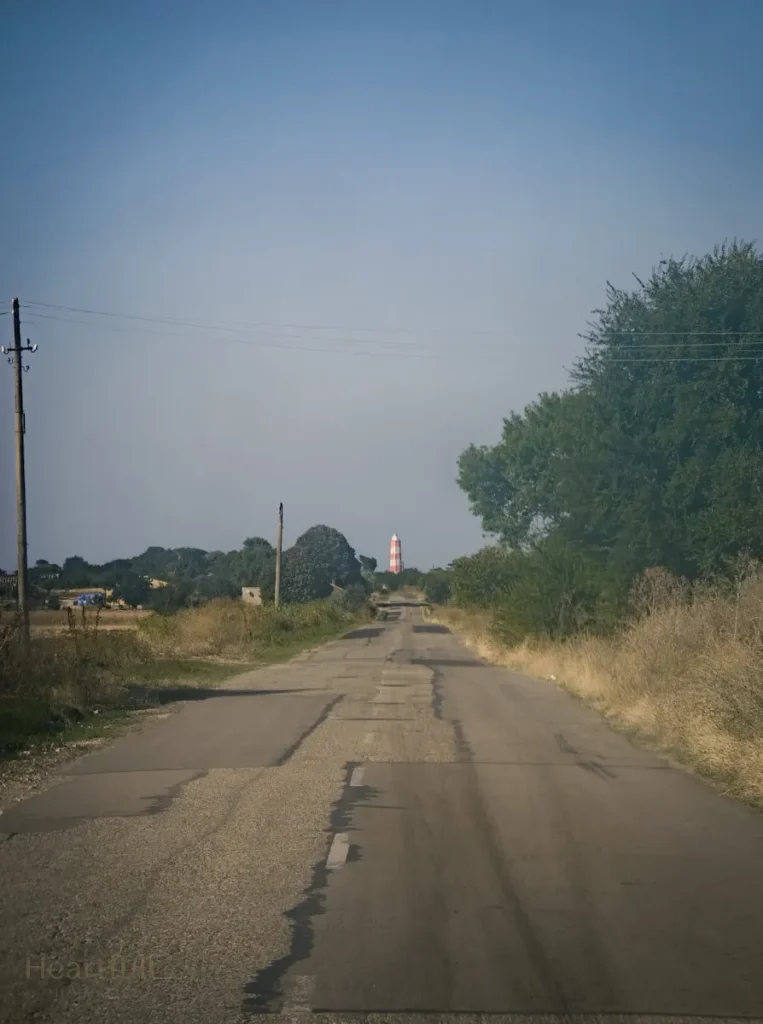
It’s also home to one of the deepest night skies I’ve ever seen, and to an occasional raw petrol odor, drifting in from natural leaks, carried off again by the wind. I’ll remember my nights in Kariya for the vivid realness of the dreams that the sound of waves crashing on the rocks — and the petrol-blue of the sea — seemed to invoke. They brought me fully to my senses and, at the same time, woke up my imagination.
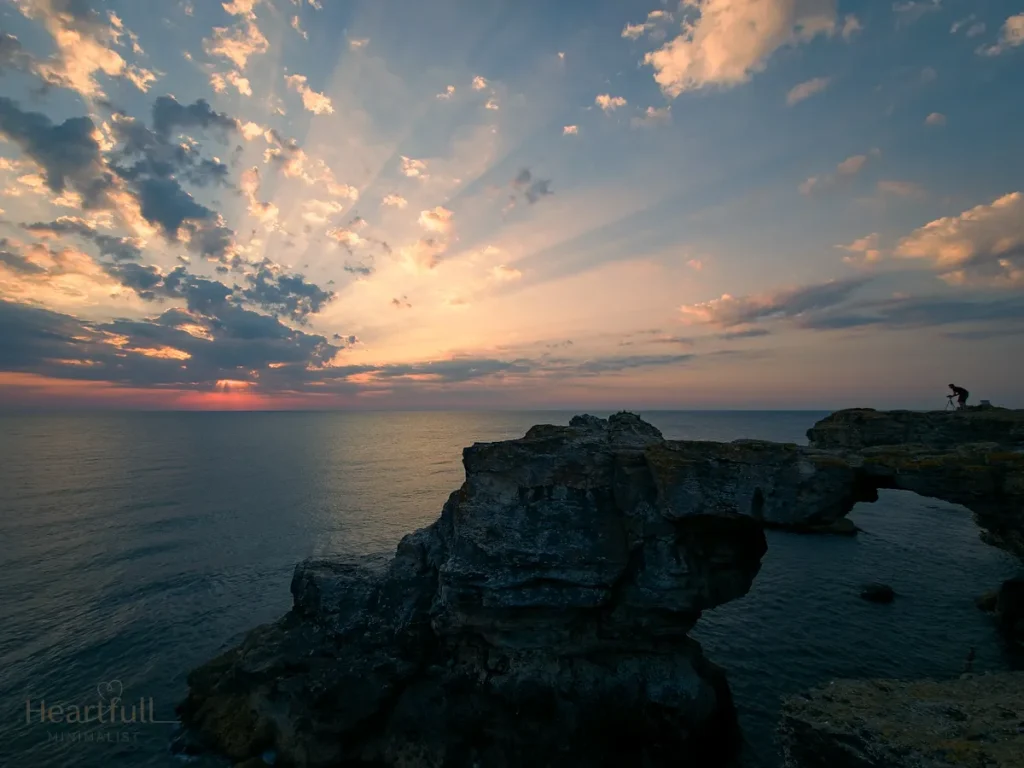
I was impatient for that morning at the rocky Arch in Tyulenovo, because I was sure it was the best place to see a dolphin — a glimpse of that wild, free roam through the vast waters, some inspiration to take home with me. I spent a good hour staring at the sea, but no dolphin showed up from that rock. As the sun was rising, it was only me and a photographer with his gear, with whom, without a word between us, I shared the beauty of the awakening day. I was following him through the best photography spots and thanked him with a quiet “goodbye” before I left.
Then, despite having no coffee left, I continued with a hike through Yailata – an archaeological and natural reserve. The hike is circular, going right next to the sea, passing by Thracian tombs, caves that were once homes, a fortress and a church in the rock, all within a little more than an hour. I went into one of the caves which was looking directly towards the sea and I was wondering, did cavemen realize the beauty of it?
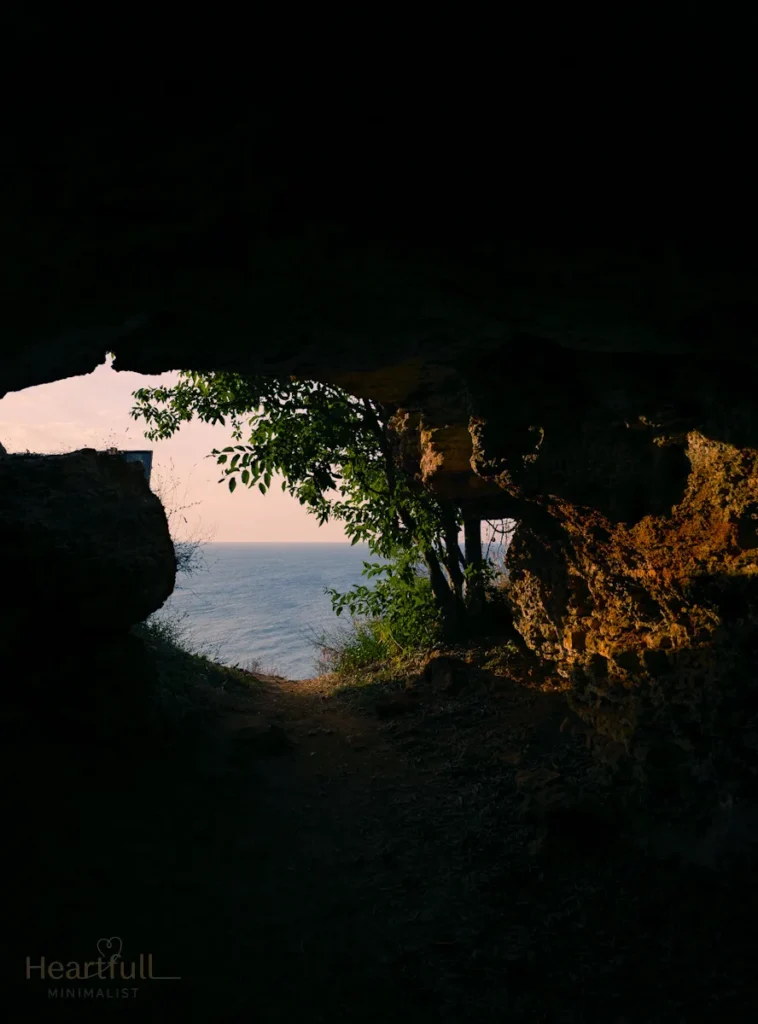
As the summer sun was working at full capacity, I headed to Bolata beach for some carefree hours. The sea at the open beaches to the north could sometimes be a bit overwhelming, with its big waves and winds, but Bolata is different – it’s protected by the surrounding high red rocks, it gives you space and time to just lay down and relax. It’s one of the places where the Black Sea slows down just enough to reveal some of its underwater beauty – Bolata is a popular place for snorkeling.
Close nearby is the cape of Kaliakra — a narrow rock stretching two kilometers into the sea, its cliffs rising up to 70 meters above the water. On top of it stand the remains of a fortress that has been defended, lost and rebuilt for over two thousand years — first Thracian, then Roman, then Byzantine, then Bulgarian. For a while, Kaliakra was its own small kingdom by the sea. Later, it became one of the last Bulgarian strongholds to hold against the Ottomans — the cliffs here still carry the legend of forty women who braided their hair together and walked into the water rather than be taken. The stones remember more than they show.
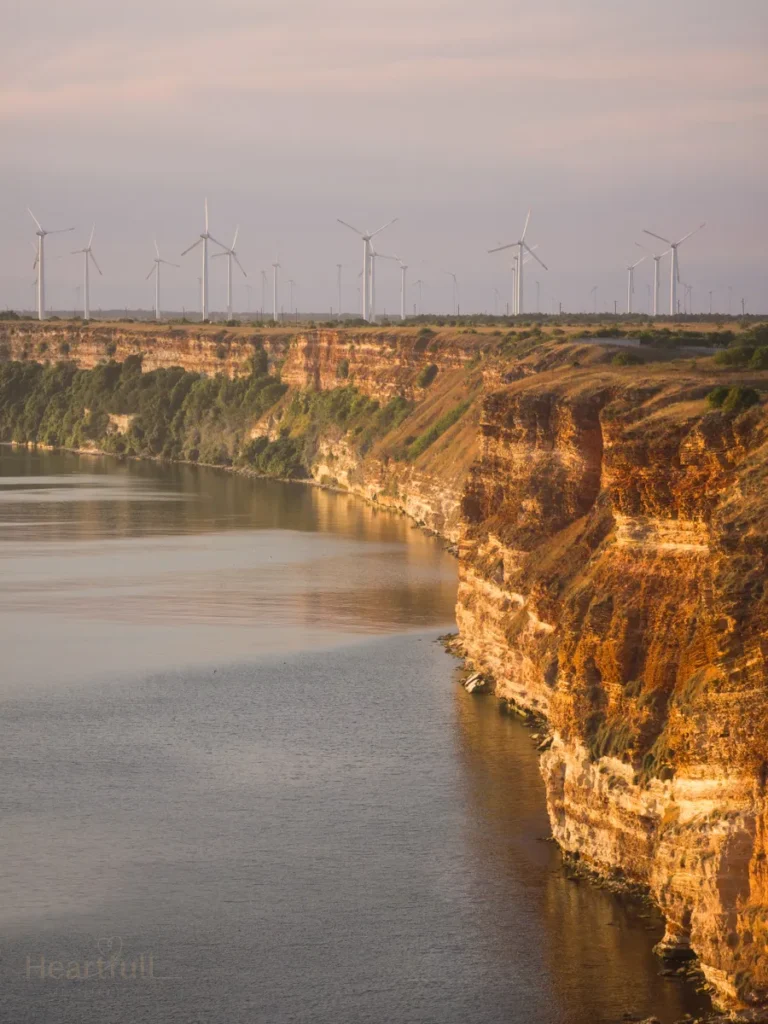
Kaliakra was my last hope to see the dolphins, but at that point it didn’t matter that much.
Because it hit me: the free roam was never a territory reserved for the dolphins. I was already in it. Going out to welcome the sun that morning was the start of the best day of my summer, despite no dolphins on the horizon.
Mission accomplished.