What’s the best time to visit Bulgaria by month, where to go and what to experience
I won’t pretend I wasn’t emotional. Watching Bulgaria win Eurovision this year did something to me that I didn’t fully expect – it made me want to call everyone I know who has never been here and say: come. Come now, before everyone else does. Come while it still feels like a discovery.
So here is my honest guide to Bulgaria, month by month – the best time to visit, depending on what you want to feel. See them on the map below.
January: Pernik
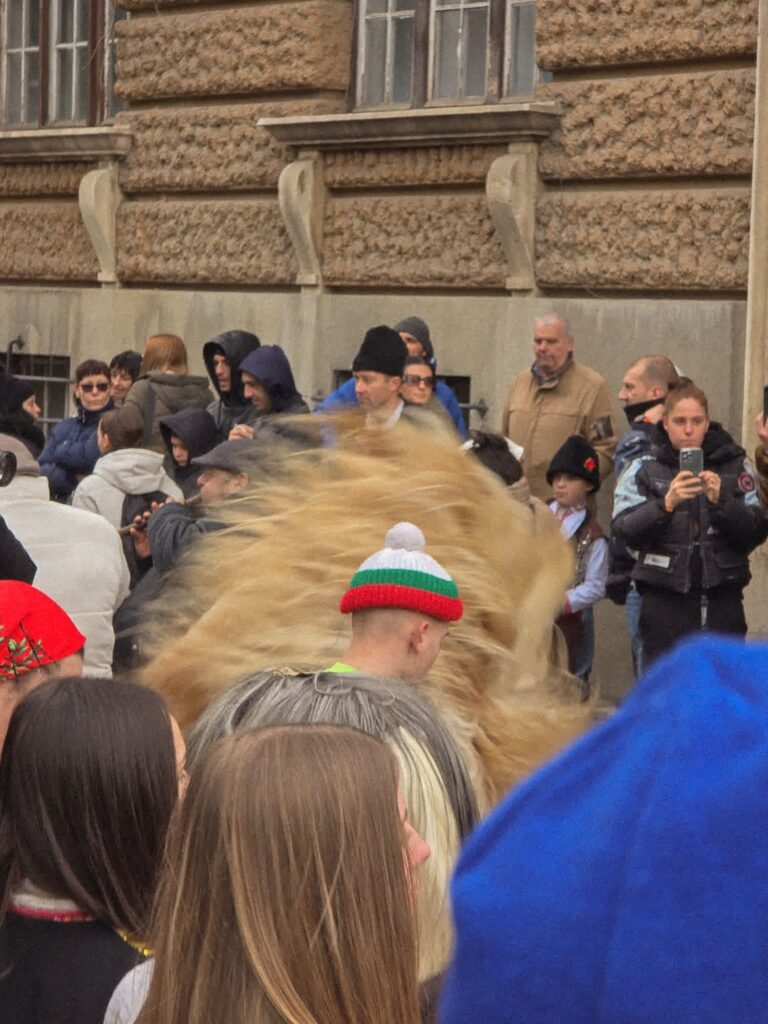
Surva and the Kukeri is the magic that happens in Pernik at the biggest scale possible. Pernik is crowned Europe’s festival capital for a good reason – every January, now for two weekends in a row since 2026, it gathers all the creatures meant to drive evil spirits away, creating a once-in-a-lifetime energetic experience for its guests. It’s Bulgaria in its most quintessential form – loud, positive, fun and gloriously chaotic.
I like to find unexpected similarities between places. Surva reminds me of only one place I have been to – Marrakech and its main square. And that’s very telling about the kind of colorful chaos you can expect.
February: Bansko
Bansko is worth all the hype. It has a dramatic mountain landscape that leaves you in awe, slopes perfect for skiing, cozy mehanas to retreat to after an active day, and a charming Bulgarian Revival district to get lost in. If you don’t ski, there are spa hotels or the authentic public mineral baths in nearby Dobrinishte. With all the paths through Pirin Mountain, Bansko is a versatile and wholesome destination in every season.
March: Veliko Tarnovo
Tsarevets – the hill of the old capital of Bulgaria – is like a piece of Game of Thrones scenery that you would think only exists in Ireland or Dubrovnik. It is also charged with history: glorious medieval victories, the ambition of Bulgarian kings to rule like Roman emperors, and tragic betrayals. The stones of the dramatic fortress above the charming town remember it all.
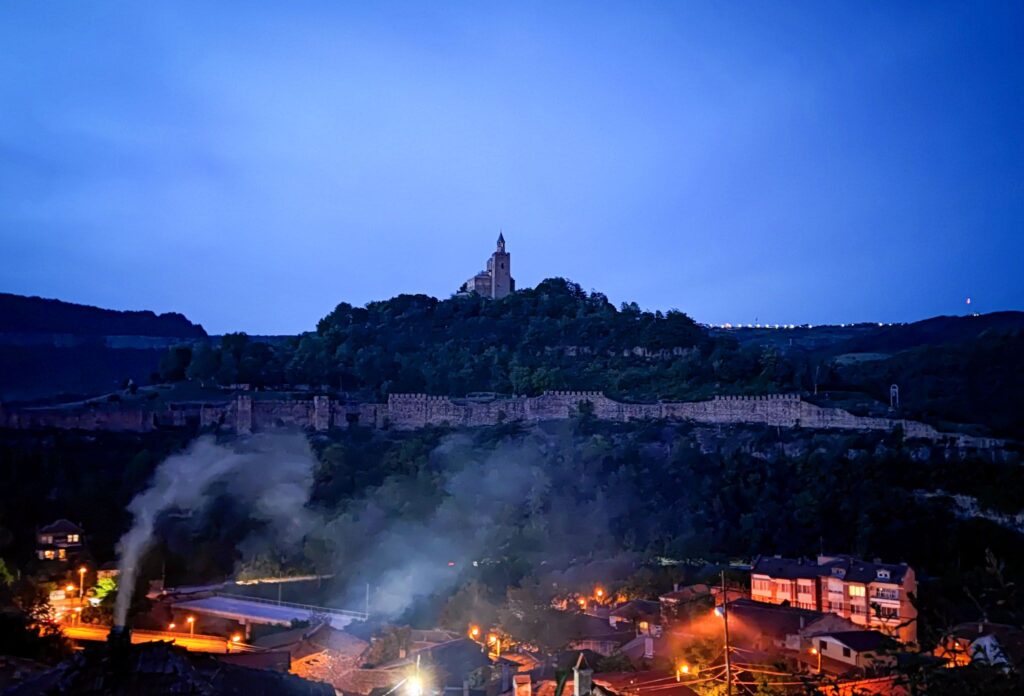
Here I found another beautiful and unexpected resemblance – Veliko Tarnovo is panoramic and hilly, just like Lisbon. Where Lisbon’s hills grow outward in their willingness to overlook the ocean, Veliko Tarnovo’s panoramas are a little less ambitious, overlooking the beautiful dance of the Yantra river around the medieval and Bulgarian Revival fairytales below. It’s a place that makes you want to draw, create and imagine.
April: Melnik
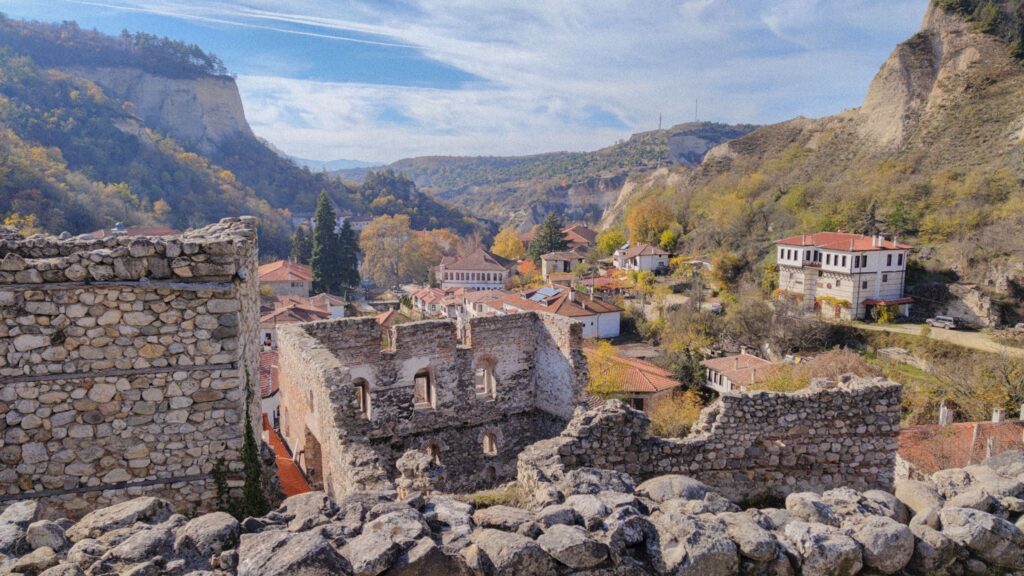
April in Bulgaria can still be a bit chilly sometimes, but not in Melnik – it’s one of the southernmost places in the country, with a mild, almost Mediterranean climate. The vibe, too, is Mediterranean: Melnik is one of the most famous places in Bulgaria to taste wine. But the excellent wine is only the cherry on top. What truly impresses is the unusually shaped white cliffs called the Melnik Pyramids, which overlook the smallest town in Bulgaria. Sunsets here are magical, complementing the coziness of the narrow streets and the warmth of the locals.
May: Sofia
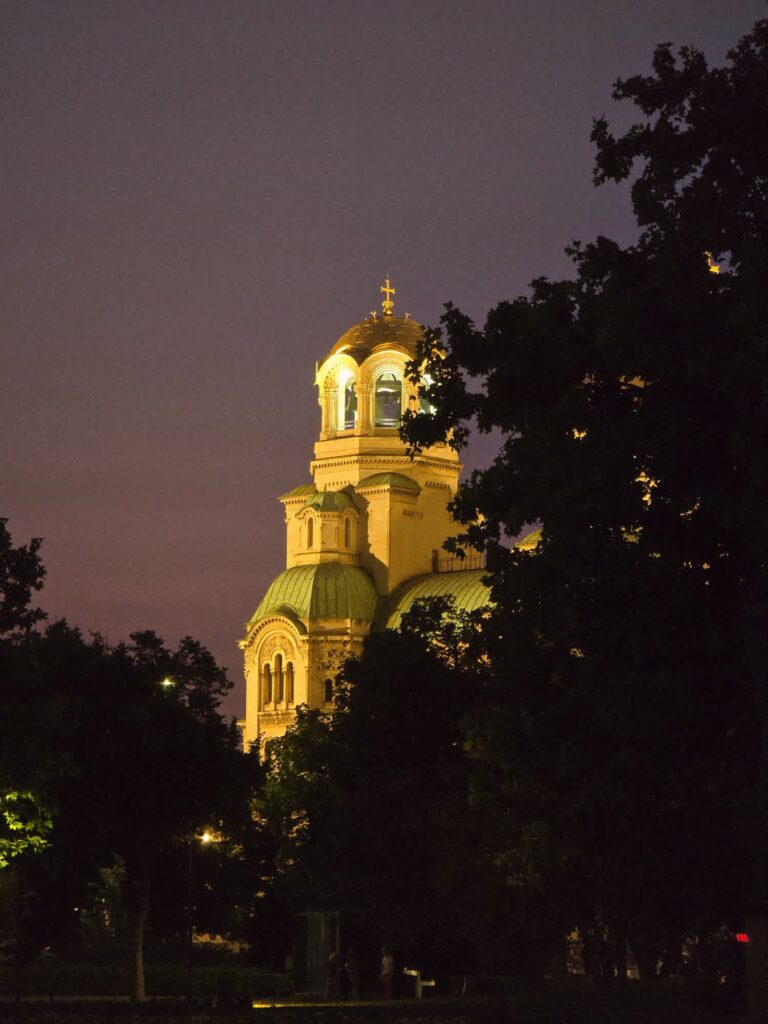
May is one of the best times to visit Sofia. It’s a very green city – full of parks and gardens – and by May it’s warm enough for cafes and restaurants to open their pretty backyards in the central old neighborhoods. If the Eurovision bid lands in Sofia, and I believe it will, May 2027 will be unlike anything the city has seen. But even without it, there are so many public holidays during this month that make Sofia unusually alive and celebratory.
The Vitosha Mountain is also worth exploring at this time of year – still a hidden gem despite being home to the Boyana Church, a UNESCO heritage site, the Boyana Waterfalls and numerous routes to dive into nature.
June: Kazanlak
I learned the modern story of the Rose Valley firsthand – standing, freezing, at the Sofia Christmas Market – from a family of rose oil producers. What might be one of the most famous things about Bulgaria turns out to be in danger, as the great effort of harvesting the rose fields requires labor that the Kazanlak region is struggling to find. The family was genuinely starting to look at tourists interested in the tradition as a potential labor force.
So, dear potential visitors of the Rose Valley: the events surrounding this beautiful Bulgarian tradition culminate in Kazanlak at the beginning of June. That’s the perfect time to experience it – and, perhaps, to help.
This region feels like a next-level hidden gem, especially knowing that just a few kilometers further down the road, in the Valley of the Thracian Kings, I was once stepping on millennia-old stones completely alone. In a world of overtouristed places, here the situation is the exact opposite – people are hopeful that visitors will help bring a place so rich in culture and tradition back to the life it deserves.
July: Burgas and the Southern Coast
The Southern Black Sea coast is made for a careless, sunny week at the sea. You will eat Tsatsa – tiny fried fish served with French fries, the Bulgarian coastal ritual – drink cold draught beer, and cool down with a bowl of tarator, the chilled yogurt and cucumber soup that somehow solves summer completely. The beaches are sandy, the water warm, the pace slow.
But don’t underestimate culture and history here. Sozopol and Nessebar are close enough to Burgas for day trips – historic sites, significant medieval churches, local art, artisans worth supporting. Another great time for Sozopol is early September, when the Apollonia Arts Festival takes place and the weather is still perfect for a lazy day at the beach.
And now that Eurovision 2027 has been announced to take place in Burgas, a late spring trip there in May suddenly doesn’t sound half bad.
August: Varna and the Northern Coast
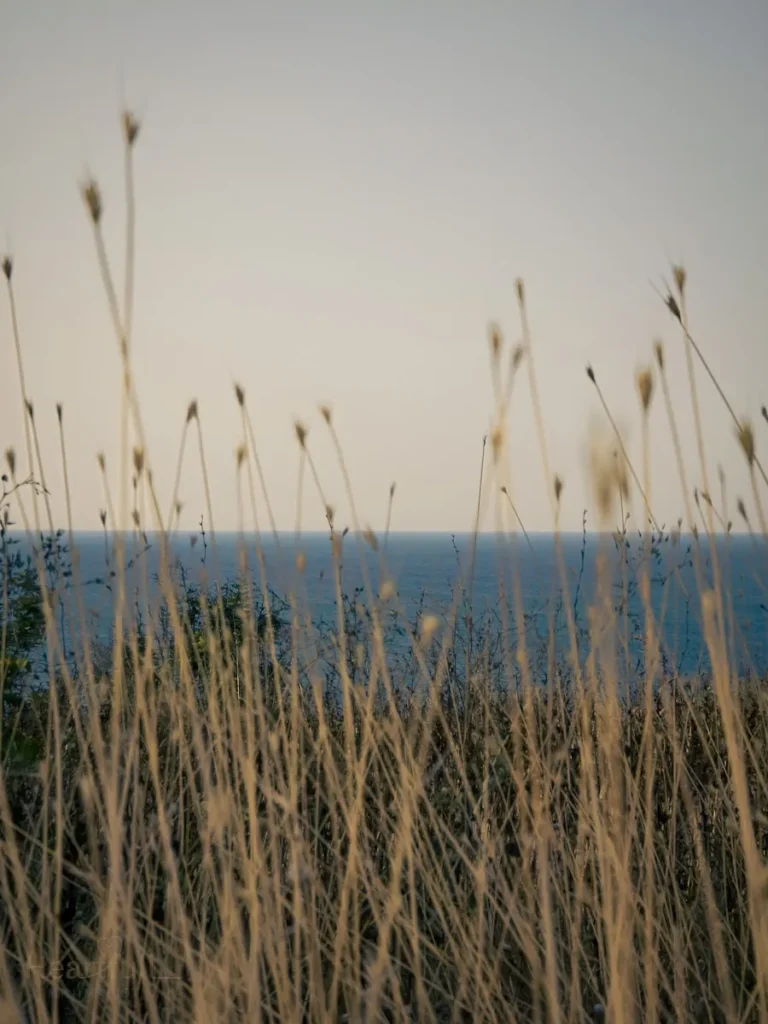
It was high time that I dedicated a whole week to explore the north of the Bulgarian Black Sea coast and I have to admit I fell in love. Especially as you go north of Varna, this becomes one of those endangered of extinction places, that make you disconnect and start thinking about the sensations of life. Kariya, the fishing village next to the Shabla Lighthouse, feels like the edge of the world – you suddenly start noticing everything, you sense more and you want to bring these moments home instead of a magnet.
You just can’t skip a sunrise at Tyulenovo and a walk through Yailata in the morning – it’s a spiritual experience. Especially after spending a few days in Varna, full of tourists and life, space and time just don’t behave the same way as you go north, between the blue of the sea and the yellow of the other sea that’s the vastness of the Dobrudzha plains.
September: Plovdiv
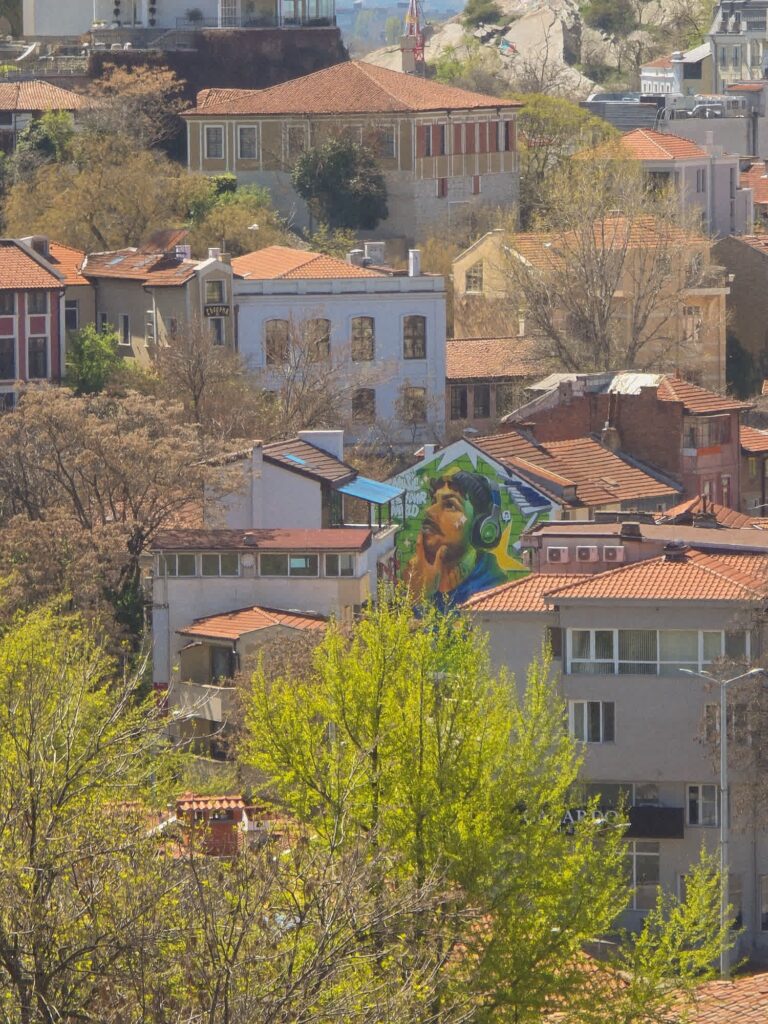
One of the most recognizable and consistently top-ranked European destinations, Plovdiv earns it. Millennia of history layered over a unique geography – seven hills, a well-preserved old town, an artistic neighborhood that has become one of the most charming in the Balkans. By September, the heat has eased and the city breathes more freely. The celebrations for the Unification Day on September 6th culminate here, adding something ceremonial to the already rich atmosphere. You can never go wrong with Plovdiv.
October: Rhodope Mountains
The Rhodope Mountains are vast, tranquil and carry an almost mystical quality. They are home to numerous small towns and villages with distinct cultures – from Smolyan and Pamporovo to Zlatograd – and in the golden season of autumn, you cannot go wrong with any of them. This is also one of the best places in Bulgaria to explore Thracian history: the ancient ruins of Perperikon and the Thracian rock-cut niches offer a glimpse into a well-forgotten past, whose full impact on contemporary Bulgarians is still to be correctly understood.
November: Velingrad
Velingrad is often called the Spa Capital of the Balkans, but I think it’s for the wrong reasons. People think of luxury hotels, expensive spa centers and over-the-top dinners. The truly unique experience, however, is something far off that beaten track. It’s the old public baths.
There are five of them still functioning in Velingrad – the highest number in Bulgaria by far – and each offers mineral water with different healing properties. Some are well maintained, some are in worse condition. But all of them are very affordable and will meet you with the authentic ritual of bathing: a raw, entirely offline experience. The baths are separated by sex and clothes are forbidden. All you need is a two-euro admission fee and some shampoo. It’s a genuine breath of fresh air — one of the few truly social experiences left that your phone cannot follow you into.
December: Ribnovo
I want to end the perfect Bulgarian year I have described with the unique tradition of the weddings of Ribnovo and the bride – the Gelina. Every wedding there becomes a massive, two-day cultural festival that completely takes over the streets. The family displays the bride’s entire dowry outside on the roads like an open-air museum, and everyone dances to the heavy, hypnotic rhythm of traditional drums. The real highlight comes on the second day: a ritual where the bride’s face is painted pure white and covered in colorful sequins. It happens only in this mountainous village, and only in winter.
I haven’t experienced it yet myself. I hope to meet you there – standing in the freezing winter air, watching this explosion of color and ancient tradition on the edge of Bulgaria. It must feel like a fairytale. And a way for the perfect Bulgarian year to linger in your memory for life.